I still remember the day I swore off dry, hockey-puck meatballs forever. It was a rainy Tuesday, I'd invited my neighbors over for what I thought would be a cozy Italian-inspired feast, and there I stood—fork in hand—staring at a platter of sad, beige orbs that tasted like seasoned cardboard. The shame. The disappointment. The awkward silence as everyone politely chewed and nodded while secretly plotting their exit strategy. That culinary catastrophe sent me on a month-long obsessive quest, testing twenty-three different meatball variations until I stumbled upon this baked chicken ricotta masterpiece that made my taste buds do a happy dance right there in the kitchen.
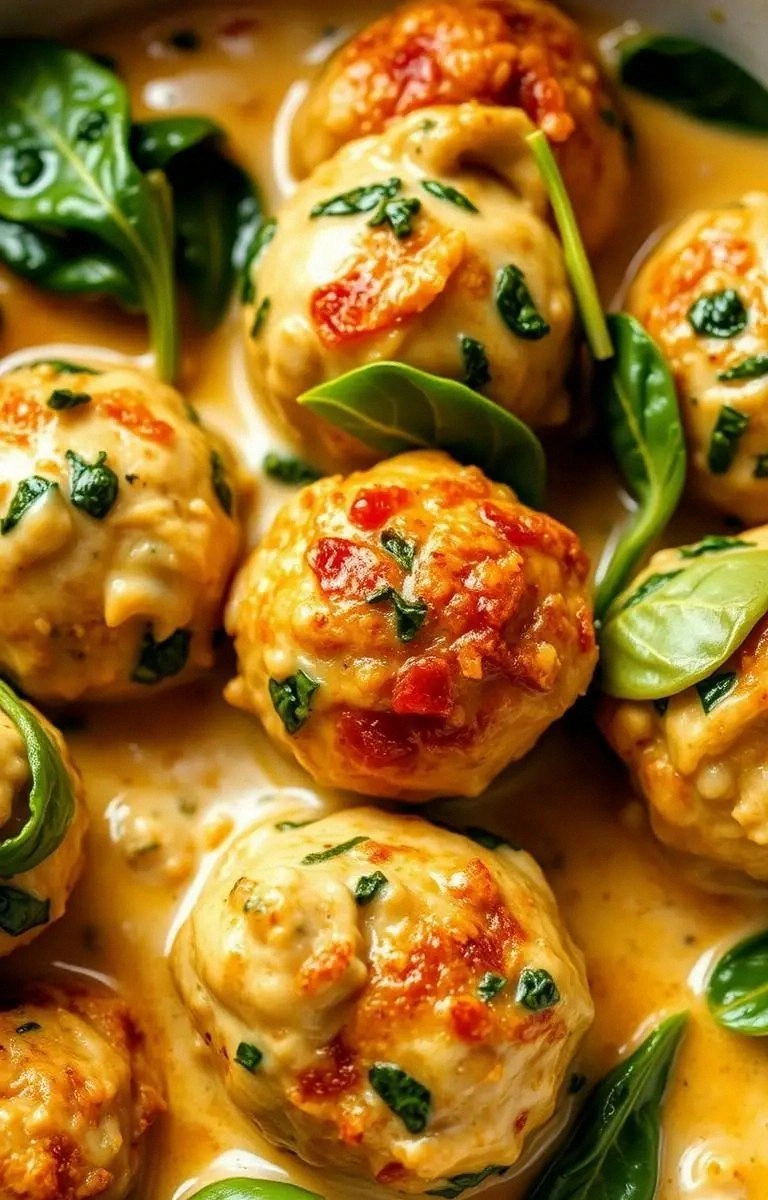
Picture this: tender ground chicken mingling with clouds of creamy ricotta, studded with vibrant spinach that adds both color and a subtle earthiness that makes you feel slightly virtuous about devouring half the tray. The magic happens when these beauties hit the oven—no messy stovetop splattering, no constant turning, just pure hands-off baking that fills your kitchen with aromas so intoxicating that your neighbors will start "accidentally" dropping by. The ricotta doesn't just add richness; it creates these little pockets of moisture that keep every bite succulent, while the spinach wilts into delicate ribbons that add both nutrition and visual appeal to what might otherwise be another boring meatball.
What sets this version apart from every other meatball recipe cluttering the internet is the technique that seems almost too simple to work, yet transforms everything. Instead of the usual breadcrumb-and-milk mixture that can make meatballs dense, we're using ricotta as both binder and flavor bomb, creating a texture so light and tender that you'll swear these are made from clouds rather than chicken. The baking method isn't just for convenience—it allows the meatballs to cook evenly without the constant compression that happens when you fry them, resulting in perfectly round, juicy morsels that actually stay round instead of flattening into sad meat-pucks.
Stay with me here—this is worth it. I'm about to share the secrets that took me from meatball zero to hero, including the temperature trick that prevents the dreaded dry-out, the seasoning ratio that makes Italian grandmothers jealous, and the serving suggestion that'll have you making double batches because leftovers become tomorrow's lunch hero. Let me walk you through every single step—by the end, you'll wonder how you ever made it any other way.
What Makes This Version Stand Out
Unbelievably Tender: The ricotta cheese acts like tiny moisture bombs throughout each meatball, creating a texture so delicate that your fork will glide through them like butter. Traditional recipes often rely on breadcrumbs that can absorb moisture and leave you with dense results, but this Italian cheese keeps everything luxuriously soft while still holding its shape perfectly.
Flavor Explosion: We're not just adding spinach for health points here—those leafy greens bring an earthy depth that complements the mild chicken beautifully, while garlic, parmesan, and a hint of nutmeg create layers of flavor that make each bite more interesting than the last. Most recipes get this completely wrong by under-seasoning, but we've cracked the code on the perfect spice balance.
Hands-Off Cooking: Forget standing over a splattering pan, dodging hot oil like you're in some kind of culinary dodgeball game. Baking these meatballs means you pop them in the oven and actually get to enjoy your company instead of being chained to the stove. Plus, they cook more evenly and you can make bigger batches without the batch-cooking nightmare.
Make-Ahead Magic: These meatballs freeze beautifully either before or after cooking, making them perfect for meal prep warriors or anyone who likes having emergency deliciousness on standby. I'll be honest—I ate half the batch before anyone else got to try it, so I started making double portions and freezing half for future me to enjoy.
Crowd-Pleasing Power: Kids love them because they're mild and cheesy, adults love them because they're sophisticated enough for dinner parties, and health-conscious folks love them because they're packed with protein and hidden vegetables. They're basically the Switzerland of meatballs—everyone can agree on them.
One-Bowl Wonder: No complicated techniques or specialty equipment required here. Everything mixes up in one bowl, shapes easily with your hands, and bakes on a single sheet pan. Okay, ready for the game-changer? The cleanup is so minimal that you'll actually look forward to making these again.
Inside the Ingredient List
The Flavor Foundation
Ground chicken forms the perfect blank canvas for our masterpiece, offering mild flavor that lets the other ingredients shine without competing for attention. Unlike beef or pork, chicken won't overpower the delicate ricotta or spinach, creating a harmonious blend where every element gets its moment in the spotlight. When selecting your chicken, look for packages labeled "ground chicken thigh" rather than breast—the slightly higher fat content keeps these meatballs incredibly moist, while still being lighter than traditional beef versions. If you can only find chicken breast, don't panic, just add an extra tablespoon of olive oil to compensate for the leanness.
Ricotta cheese is the secret weapon that separates good meatballs from legendary ones, bringing both richness and structure without the heaviness of traditional binders. Full-fat ricotta creates the most luxurious texture, but part-skim works if you're watching calories—just avoid the fat-free variety which can make the mixture grainy and dry. The key is draining any excess liquid from the container before adding it to your mixture; nobody wants watery meatballs that fall apart before they even hit the oven. Pro tip: Let the ricotta come to room temperature before mixing—it incorporates more smoothly and prevents cold spots in your meatball mixture.
The Green Machine
Fresh spinach brings more than just color to this party—it adds subtle earthiness, vitamins, and that satisfying feeling of eating your vegetables without actually tasting like rabbit food. You'll want to use baby spinach for its tender texture and mild flavor, chopping it finely so it distributes evenly throughout each meatball instead of creating spinach clumps that make kids suspicious. Frozen spinach works in a pinch, but you must squeeze out every last drop of moisture using a clean kitchen towel, otherwise you'll end up with soggy meatballs that refuse to hold their shape. The wilting happens naturally during baking, so there's no need to pre-cook the spinach and add an extra step to your life.
The Seasoning Superstars
Parmesan cheese does double duty here, adding both salty umami depth and helping with the binding process thanks to its natural dryness. Skip the pre-grated stuff that tastes like sawdust—buy a wedge and grate it fresh for maximum flavor impact that'll make you wonder why you ever settled for less. Garlic powder might seem basic, but it distributes more evenly than fresh minced garlic, ensuring every bite has that perfect garlicky note without any harsh raw garlic surprises. The egg acts as the glue that holds everything together, but one is plenty—too many eggs and you'll have chicken-flavored quiche balls instead of meatballs.
Italian seasoning brings the classic herbaceous notes that make these taste authentically Italian, while a pinch of nutmeg might sound weird but trust me—it's what separates restaurant-quality meatballs from sad cafeteria versions. The nutmeg enhances the ricotta and spinach combo, creating that subtle warmth that makes people ask "what's in these?" in the best possible way. Salt and pepper might seem obvious, but under-seasoning is the number one reason homemade meatballs taste bland—be bold with your seasoning because the chicken needs it.
The Unexpected Game-Changers
Balsamic vinegar might seem like an odd addition to meatballs, but just a teaspoon adds subtle sweetness and depth that balances the richness of the ricotta beautifully. Don't worry—you won't taste vinegar in the final product, but you'll notice that these meatballs have a more complex flavor profile than your average version. Lemon zest brightens everything up, cutting through the richness and adding a fresh note that makes these feel lighter than they actually are. Use a microplane to get the finest zest possible, and only zest the yellow part— the white pith underneath is bitter and will ruin the party.
Olive oil isn't just for greasing the pan—a tablespoon mixed into the meatball mixture adds extra insurance against dryness, especially if you're using lean chicken breast. Choose a good quality extra-virgin olive oil because you're worth it, and the flavor really does make a difference in the final product. Everything's prepped? Good. Let's get into the real action...
The Method — Step by Step
- Set up your workspace like a pro by preheating your oven to 400°F (200°C) and lining a large baking sheet with parchment paper or a silicone mat. This temperature is the sweet spot—hot enough to create beautiful caramelization on the outside while keeping the inside perfectly juicy, but not so hot that the bottoms burn before the centers cook through. Position your oven rack in the middle position for even heat distribution, because nobody deserves meatballs that are burnt on the bottom and raw in the middle. While the oven heats, you can mix your ingredients without rushing, which leads to better texture and fewer overworked meatballs.
- Create your flavor base by adding the ground chicken to a large mixing bowl, breaking it up gently with a fork so it doesn't form dense clumps when you add the other ingredients. Add the ricotta cheese, drained of any excess liquid, along with the finely chopped spinach, grated Parmesan, egg, and all your seasonings. Here's where most recipes go wrong—they dump everything in at once and start mushing it together like they're kneading bread. Instead, use your fork to lightly distribute everything before you even think about using your hands, which prevents overmixing and keeps the texture tender.
- Mix with intention and restraint, using your hands to gently fold the ingredients together just until combined. The mixture should feel slightly tacky but not overly wet—if it's sticking to your hands like glue, add a tablespoon of breadcrumbs to absorb excess moisture. I dare you to taste this raw mixture and not go back for seconds (okay, maybe don't eat raw chicken, but the ricotta mixture alone is irresistible). The key is stopping as soon as everything comes together—overworking the mixture activates proteins that make tough, rubbery meatballs that bounce off your plate.
- Portion and shape your meatballs using a small cookie scoop or tablespoon measure for uniformity—this isn't just about aesthetics, it ensures even cooking so you don't end up with some overcooked and others still pink inside. Roll gently between your palms without compressing too hard, aiming for golf ball-sized portions that will feed a crowd without being intimidatingly huge. If the mixture sticks to your hands, keep a small bowl of water nearby and dampen your palms occasionally—this trick makes rolling smooth, perfect spheres a breeze. Place them on your prepared baking sheet with about an inch of space between each one for proper air circulation.
- Slide your perfect meatballs into the preheated oven and set your timer for 20 minutes, but don't walk away completely—these beauties need your attention for the final flavor boost. While they bake, the ricotta will create little steam pockets that keep everything moist, while the Parmesan forms tiny crispy edges that add textural interest. The smell that fills your kitchen at the 12-minute mark is absolute perfection—that heady mix of garlic, herbs, and toasting cheese that makes stomachs growl and neighbors jealous. Resist the urge to open the oven door too early, though, or you'll let out the heat and extend the cooking time.
- Create the finishing touch by mixing together a simple glaze of balsamic vinegar and a touch of honey, which you'll brush on during the last 5 minutes of baking for a glossy, restaurant-worthy finish. This step is pure magic—the vinegar caramelizes slightly, creating a subtle sweetness that complements the savory meatballs perfectly without overwhelming their delicate flavor. Watch closely during these final minutes because the sugar in the honey can go from perfectly caramelized to burnt in the blink of an eye. The result is a beautiful mahogany color that makes these look like they came from a fancy Italian restaurant rather than your home kitchen.
- Test for doneness by inserting an instant-read thermometer into the center of a meatball—it should read 165°F (74°C) to ensure the chicken is fully cooked and safe to eat. If you don't have a thermometer, cut one in half—the center should be opaque and white, with no pink remaining and the juices should run clear, not pink or red. Remove from the oven and let them rest for 5 minutes before serving, which allows the juices to redistribute throughout the meatball instead of running out all over your plate. This next part? Pure magic.
- Serve these beauties straight from the oven while they're at their peak of juiciness, either nestled in a warm marinara sauce or simply garnished with fresh basil and a shower of extra Parmesan. The contrast of the crispy exterior giving way to the creamy, tender interior is the kind of textural experience that makes people close their eyes and sigh with satisfaction. They're perfect over pasta, stuffed into crusty rolls for meatball subs, or served alongside a crisp salad for a lighter meal that still feels indulgent. Picture yourself pulling this out of the oven, the whole kitchen smelling incredible, and watch how quickly these disappear—I'll bet you can't eat just three.
- Store any leftovers (though I doubt there will be many) in an airtight container in the refrigerator for up to 4 days, or freeze for up to 3 months for emergency deliciousness. The best part about these meatballs is that they actually improve in flavor after a day in the fridge, as the seasonings have time to meld and develop deeper complexity. Reheat gently in sauce or wrapped in foil with a splash of broth to restore them to their former glory without drying them out. That's it—you did it. But hold on, I've got a few more tricks that'll take this to another level...
Insider Tricks for Flawless Results
The Temperature Rule Nobody Follows
Room temperature ingredients aren't just chef snobbery—they're the difference between meatballs that hold together and ones that crumble like your resolve during a midnight snack attack. Take your ricotta, egg, and even the ground chicken out of the fridge 30 minutes before mixing; cold ingredients don't bind properly and can lead to meatballs that fall apart in the oven. This simple step ensures everything incorporates smoothly without overmixing, which is the enemy of tender texture. A friend tried skipping this step once—let's just say it didn't end well, and she ended up with meatball soup instead of spheres.
Why Your Nose Knows Best
Trust your sense of smell when these are baking—the moment your kitchen fills with that intoxicating aroma of garlic, herbs, and toasting cheese, start checking for doneness. Most recipes give arbitrary times, but every oven is different, and your nose is actually a more reliable indicator than a timer alone. When the smell becomes almost unbearably delicious, that's usually when they're about 2-3 minutes from perfect doneness. This sensory checkpoint has saved me from overcooked, dry meatballs more times than I can count.
The 5-Minute Rest That Changes Everything
Those five minutes of resting time after baking aren't optional—they're when the magic happens and the proteins relax, allowing juices to redistribute throughout instead of flooding your plate the moment you cut in. Think of it like letting a steak rest, but for meatballs. During this time, the internal temperature actually rises a few degrees, ensuring food safety while maximizing juiciness. Use this time to warm your serving plates, toss your salad, or pour yourself a well-deserved glass of wine—you've earned it.
The Size Sweet Spot
Size matters more than you think—too small and they dry out, too large and the centers stay raw while the outsides burn. Golf ball-sized (about 1.5 inches diameter) hits the perfect balance, cooking through in exactly 20 minutes while staying juicy. This size also makes them ideal for everything from pasta topping to sandwich filling without being unwieldy. If you're feeding kids or want appetizer portions, go smaller but reduce the cooking time accordingly, checking after 15 minutes.
The Moisture Insurance Policy
Even with perfect technique, sometimes you need backup—keep a small bowl of ice water nearby when mixing and add a teaspoon at a time if your mixture feels dry. Cold water helps maintain the temperature while adding just enough moisture without making the mixture soggy. This is especially helpful if you're using very lean chicken or if your ricotta seems drier than usual. The goal is a mixture that holds together when squeezed but doesn't stick to your hands like adhesive.
Creative Twists and Variations
This recipe is a playground. Here are some of my favorite ways to switch things up:
Mediterranean Sunshine
Swap the Italian seasoning for a blend of oregano, lemon zest, and fresh mint, then add crumbled feta to the ricotta mixture for Greek-inspired meatballs that transport you straight to a seaside taverna. The briny feta adds tangy pockets of flavor that complement the spinach beautifully, while mint brings a refreshing note that makes these perfect for summer entertaining. Serve with tzatziki and warm pita for a Mediterranean feast that'll have everyone asking for the recipe.
Spicy Spanish Nights
Add smoked paprika, a pinch of saffron, and minced chorizo to the mixture for Spanish-style meatballs with deep, smoky flavor and a gorgeous golden color. The chorizo adds both spice and fat, keeping everything moist while infusing the chicken with its distinctive paprika-forward taste. These are spectacular served in a tomato sauce spiked with sherry, or as tapas with toothpicks and a drizzle of aioli.
French Onion Elegance
Caramelize onions until deeply golden, chop them finely, and fold them into the mixture along with gruyère instead of Parmesan for French onion soup-inspired meatballs that are pure comfort food. The sweetness of the caramelized onions plays beautifully against the nutty gruyère, creating a sophisticated flavor profile that elevates these from everyday to special occasion worthy. Serve them over egg noodles with a splash of white wine and cream for a dish that tastes like it came from a Parisian bistro.
Asian Fusion Fun
Replace the Italian seasoning with ginger, garlic, and scallions, swap the Parmesan for miso paste, and add sesame oil for Asian-inspired meatballs that pair beautifully with rice and stir-fried vegetables. The umami bomb from the miso adds incredible depth, while the ginger brings brightness that cuts through the richness of the ricotta. Drizzle with a soy-honey glaze before serving for a sweet-savory finish that'll make these disappear faster than you can say "fusion."
Breakfast-for-Dinner Delight
Add crispy bacon bits and sharp cheddar to the mixture, serve them over buttermilk biscuits with sausage gravy for a breakfast-inspired dinner that'll have everyone licking their plates clean. The smoky bacon adds both crunch and flavor, while the cheddar creates gooey pockets of cheesy goodness throughout each meatball. This is comfort food at its finest, perfect for those nights when you need something indulgent and satisfying.
Vegetable Garden Boost
Finely grate zucchini and carrots into the mixture along with the spinach for extra vegetables that add both nutrition and natural sweetness that kids will never detect. The key is squeezing out excess moisture from the grated vegetables using a clean kitchen towel, preventing soggy meatballs while adding vitamins and fiber. This is my go-to variation for picky eaters who need more vegetables but refuse to eat anything green and obvious.
Storing and Bringing It Back to Life
Fridge Storage
Store cooled meatballs in an airtight container with a tight-fitting lid, separating layers with parchment paper to prevent them from sticking together and tearing when you remove them. They'll keep beautifully for up to 4 days in the refrigerator, and honestly, they taste even better on day two after the flavors have had time to meld and develop deeper complexity. The ricotta helps them stay moist longer than traditional meatballs, so you don't have to worry about them drying out like sad, forgotten leftovers. Add a tiny splash of water before reheating—it steams back to perfection, restoring them to their fresh-from-the-oven glory.
Freezer Friendly
These meatballs are freezer superstars whether you freeze them raw or cooked, making them perfect for meal prep or emergency deliciousness when you need dinner in a hurry. For raw meatballs, flash-freeze them on a baking sheet until solid, then transfer to freezer bags—this prevents them from sticking together in one giant meatball blob. Cooked meatballs can be frozen directly in freezer bags with all the air pressed out, and they'll maintain their quality for up to 3 months. Label everything with the date because while they won't become unsafe after 3 months, the texture starts to degrade and nobody deserves subpar meatballs.
Best Reheating Method
Skip the microwave unless you enjoy rubbery, unevenly heated disappointment—the best way to reheat these beauties is in a covered skillet with a splash of broth or sauce over medium-low heat. This gentle method warms them through without drying them out, and the steam created under the lid helps restore their original juiciness. If you're reheating from frozen, let them thaw overnight in the refrigerator first, then warm them gently in sauce for 15-20 minutes until heated through. For a quick lunch, slice them in half and warm them in a toaster oven—they heat faster and get slightly crispy edges that add textural interest to salads or sandwiches.