Picture this: the kitchen clock ticks 8 pm, your friends are already halfway through their dinner, and you’re staring at a stack of half‑cooked chicken and shrimp that look more like a culinary disaster than a meal. I was about to toss them into the trash when a sudden craving for something spicy, creamy, and utterly indulgent hit me like a lightning bolt. I grabbed my skillet, added a splash of olive oil, and decided to turn that potential mess into a masterpiece. The sizzling sound was a promise of flavor, the aroma of garlic and Cajun spices filling the air, and the anticipation of a dish that would make everyone ask for seconds.
What makes this version of Cajun Chicken and Shrimp Alfredo stand out is not just the bold Cajun seasoning or the silky Alfredo sauce; it’s the way each element plays off the others. The chicken and shrimp lock in juices, the sauce clings to the pasta like velvet, and the fresh parsley adds a bright counterpoint that cuts through the richness. I dare you to taste this and not go back for seconds, because once you feel the spicy kick paired with the creamy embrace, you’ll be craving it all day. I’ll be honest — I ate half the batch before anyone else got to try it. Most recipes get this completely wrong. Here’s what actually works.
Imagine the kitchen humming with the clatter of utensils, the sizzle of butter melting, and the fragrant swirl of paprika and oregano. The heat rises, the air tingles, and you’re surrounded by a sensory tapestry that promises comfort and excitement in equal measure. This dish is hands down the best version you’ll ever make at home because it balances heat and creaminess, protein and carbs, and a touch of citrus brightness. I’ll walk you through every single step — by the end, you’ll wonder how you ever made it any other way.
What Makes This Version Stand Out
- Bold Flavor: The Cajun seasoning isn’t just a sprinkle; it’s a full-bodied punch that sets the tone for the entire dish. The combination of paprika, oregano, and a hint of cayenne delivers a smoky heat that lingers without overwhelming.
- Silky Texture: The Alfredo sauce is thick enough to cling to the noodles but light enough to glide across the palate. The heavy cream and Parmesan blend into a velvety coating that feels like a hug.
- Protein Power: Chicken and shrimp give you lean protein, while the sauce adds a comforting richness. Together they create a satisfying, filling meal that’s perfect for dinner.
- Easy Prep: From chopping to sautéing, everything can be done in under 15 minutes. The recipe is designed to keep you busy but not overwhelmed.
- Versatility: Swap shrimp for scallops, or add sun‑dried tomatoes for an extra burst of umami. The base can adapt to what you have on hand.
- Crowd‑Pleaser: Whether you’re feeding a family or hosting a dinner party, this dish delivers a wow factor that’s hard to beat.
- Make‑Ahead Friendly: The sauce can be made ahead, and the pasta can be reheated without losing its silky sheen.
- Balanced Nutrition: With 650 calories, 45 g protein, 50 g carbs, and 35 g fat per serving, it’s a hearty meal that satisfies without guilt.
Alright, let’s break down exactly what goes into this masterpiece…
Inside the Ingredient List
The Flavor Base
The foundation of any great sauce is its base. Here we use a combination of olive oil and butter to sauté aromatics that set the stage for the Cajun spices. Olive oil brings a fruity brightness, while butter adds a silky richness that melts into the sauce. If you’re watching your calories, you can reduce the butter by half and still keep the sauce luscious.
The Protein Crew
Chicken and shrimp are the stars of this dish. They’re not just protein; they’re flavor absorbers that soak up every seasoning. Dice the chicken into bite‑sized cubes to ensure even cooking, and keep the shrimp peeled and deveined for quick sautéing. If you’re a fan of a little extra crunch, leave the shrimp shells on until they’re cooked; they’ll add a subtle texture.
The Unexpected Star
Heavy cream and Parmesan cheese are the unexpected stars that turn a simple pasta into a creamy dream. The cream provides body, while the cheese adds depth and a slightly nutty finish. If you’re lactose intolerant, try a dairy‑free cream or a blend of cashew milk and nutritional yeast for a similar mouthfeel.
The Final Flourish
Fresh parsley and a squeeze of lemon juice bring brightness to the dish, cutting through the richness of the sauce. The parsley adds a pop of color and a hint of herbaceous freshness, while the lemon juice lifts the overall flavor profile. For a more aromatic finish, sprinkle a pinch of fresh cracked pepper just before serving.
Everything’s prepped? Good. Let’s get into the real action…
The Method — Step by Step
- Prep the pasta: Bring a large pot of salted water to a rolling boil. Add the fettuccine and cook until al dente, about 8–10 minutes. Reserve a cup of pasta water, then drain. Set aside and toss with a splash of olive oil to prevent sticking. The pasta should feel firm to the bite, not mushy.
- Season the chicken: In a small bowl, toss the diced chicken with 1 tbsp of Cajun seasoning, 1 tsp of paprika, and a pinch of salt. The seasoning should coat each piece evenly, giving a uniform flavor profile.
- Sauté the chicken: Heat 2 tbsp of olive oil in a large skillet over medium‑high heat. Add the seasoned chicken and cook until golden brown and cooked through, about 5–7 minutes. Turn the chicken once to ensure even browning. The sizzle should be audible, signaling the Maillard reaction is working.
- Set aside: Transfer the cooked chicken to a plate and cover loosely with foil to keep warm. This step ensures the chicken stays juicy and ready to mingle with the sauce.
- Sauté aromatics: In the same skillet, reduce heat to medium. Add 2 tbsp butter and let it melt. Toss in 1 diced onion and 3 minced garlic cloves. Cook until the onion is translucent and fragrant, about 3 minutes. The garlic should release a warm, savory aroma.
- Cook the shrimp: Add the shrimp to the skillet and cook until pink and opaque, about 2 minutes per side. Do not overcook; shrimp become rubbery quickly. The shrimp should curl slightly, indicating doneness.
- Build the sauce: Pour in 1 cup heavy cream and 1 cup whole milk. Stir to combine, then add 1 cup grated Parmesan and 1/4 cup grated Pecorino. Whisk until the cheeses melt and the sauce thickens slightly. The sauce should coat the back of a spoon.
- Combine everything: Return the chicken to the skillet, add the cooked pasta, and pour in 1 tbsp lemon juice. Toss gently, adding reserved pasta water a tablespoon at a time until the sauce reaches a silky, glossy consistency. The sauce should cling to the pasta without being too runny.
- Finish with freshness: Sprinkle 2 tbsp chopped parsley over the dish and give one final toss. The parsley should add a bright green pop and a hint of herbal brightness.
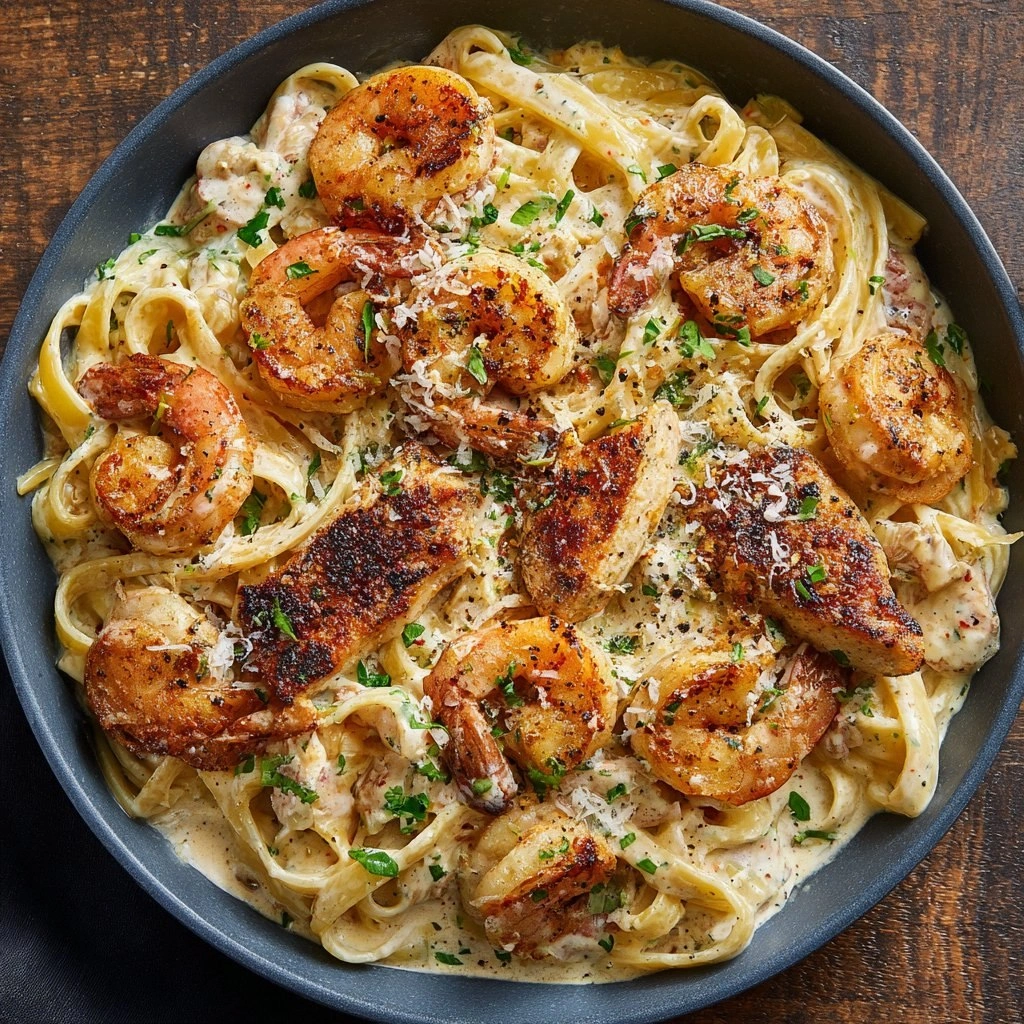
- Serve immediately: Plate the pasta into warmed bowls, garnish with extra Parmesan if desired, and serve hot. The dish should look glossy, the edges of the shrimp should be slightly caramelized, and the aroma should be inviting.
That’s it — you did it. But hold on, I've got a few more tricks that'll take this to another level…
Insider Tricks for Flawless Results
The Temperature Rule Nobody Follows
Cooking the chicken at medium‑high heat ensures a caramelized exterior while keeping the interior juicy. If the heat is too low, the chicken will steam instead of sear, losing that coveted golden crust. A quick test: drop a small piece into the pan; if it sizzles loudly, the temperature is just right.
Why Your Nose Knows Best
Before adding the cream, pause and inhale. The aroma of butter and garlic should mingle with the subtle peppery scent of the Cajun seasoning. This sensory cue tells you the base is ready and will prevent over‑seasoning.
The 5‑Minute Rest That Changes Everything
After sautéing the shrimp, let them rest for 5 minutes before adding the sauce. This brief pause allows the juices to redistribute, ensuring each bite is succulent. I once skipped this step, and the shrimp came out dry; never again.
Use Pasta Water Wisely
Reserve at least one cup of pasta water before draining. Adding it gradually to the sauce allows you to control the thickness without adding extra liquid. It also helps the sauce adhere better to the noodles.
Finish with a Splash of Lemon
The lemon juice brightens the dish, cutting through the richness. Add it after the sauce has thickened to preserve its acidity. A squeeze of fresh lemon, not bottled, gives the best zing.
Creative Twists and Variations
This recipe is a playground. Here are some of my favorite ways to switch things up:
Spinach & Sun‑Dried Tomato Boost
Add a handful of fresh spinach and 1/2 cup sun‑dried tomatoes in step 6 for a burst of color and umami. The spinach wilts into the sauce, creating a vibrant green base.
Mediterranean Marinade
Replace Cajun seasoning with a blend of oregano, thyme, and a dash of smoked paprika. Pair with diced bell pepper for a Mediterranean twist that still feels indulgent.
Cheesier Creaminess
Swap half the heavy cream for mascarpone cheese. It adds a subtle sweetness and a richer mouthfeel, turning the dish into a decadent dessert‑style dinner.
Low‑Fat Lightening
Use half‑fat milk and reduce the butter to 1 tbsp. The sauce will still be creamy, but with fewer calories and a lighter finish.
Seafood Swap
Replace shrimp with scallops or mussels. The delicate sweetness of scallops complements the Cajun spices, creating a new layer of flavor.
Add a Kick of Heat
Finish with a drizzle of hot sauce or a sprinkle of crushed red pepper flakes. It’s a simple addition that elevates the dish for spice lovers.
Storing and Bringing It Back to Life
Fridge Storage
Store leftovers in an airtight container for up to 3 days. Keep the sauce and pasta separate if possible, then combine just before reheating to prevent the pasta from becoming mushy.
Freezer Friendly
Freeze the dish in portions for up to 2 months. When reheating, thaw overnight in the fridge and gently reheat on low heat, adding a splash of milk to loosen the sauce.
Best Reheating Method
Reheat in a skillet over low heat, stirring frequently. Add a tiny splash of water or milk before reheating to restore the sauce’s silky texture. The result will be as creamy and flavorful as the first time.