Picture this: a Saturday morning, the sun slants through the kitchen window, and you’re standing over a pan that’s already sizzling with the faint scent of butter. You’ve just pulled a loaf of bread from the fridge, the crust already browned in the toaster, and you’re staring at a bowl of eggs that have somehow turned into a cloudy, slightly pink cloud. The moment feels like a culinary cliffhanger, and you’re about to decide whether to go the classic route or take a daring detour. That’s where this recipe jumps in, flipping the ordinary breakfast into a flavor-packed, aroma-rich experience that feels like a mini‑festival in your mouth.
I dare you to taste this and not go back for seconds. The first bite delivers a silky scramble that feels like cloud‑soft clouds, immediately followed by a burst of fresh basil and pine from the pesto. The toast, lightly toasted until it’s just the right crunch, acts as a sturdy base that cradles the creamy eggs like a supportive friend. And the finishing touch of parmesan and a whisper of lemon zest lifts the entire dish into a bright, sophisticated finish that’s surprisingly sophisticated for a breakfast staple.
If you’ve ever struggled to keep scrambled eggs fluffy, or you’ve been disappointed by pesto that tastes like it’s been sitting on a shelf, this version will change the game. We’ll keep the pesto bright and vibrant, the eggs airy and moist, and the toast crisp yet tender. The secret? A precise balance of heat, timing, and a few unconventional tricks that make the whole dish sing. I’m going to walk you through every single step, and by the end, you’ll wonder how you ever made it any other way.
Picture yourself pulling this out of the pan, the whole kitchen smelling incredible, and your guests already swooning over the first bite. That’s the power of a dish that’s simple enough for a quick weekday but complex enough to wow. And trust me, the best part is that it only takes about 45 minutes from start to finish, leaving you plenty of time for coffee and conversation. So grab your apron, and let’s dive into the ultimate quick pesto & scrambled eggs experience.
What Makes This Version Stand Out
- Taste: The pesto is made with fresh basil, pine nuts, and a splash of lemon juice that gives it a bright, tangy edge. The eggs absorb that flavor without losing their natural creaminess, resulting in a dish that sings on the palate.
- Texture: The scrambled eggs are cooked low and slow, yielding a silky, almost custard-like consistency that contrasts perfectly with the crunchy toast.
- Simplicity: No elaborate sauces or complicated techniques—just a handful of ingredients and a few straightforward steps.
- Uniqueness: The addition of a drizzle of olive oil over the eggs before serving adds a glossy finish that feels indulgent yet effortless.
- Crowd Reaction: Friends who’ve tried the classic version often say, “This is hands down the best version you'll ever make at home.”
- Ingredient Quality: Using a high‑quality pesto and fresh eggs elevates the dish without extra effort.
- Cooking Method: The gentle heat technique keeps the eggs tender and prevents them from drying out.
- Make‑Ahead Potential: The pesto can be prepared a day ahead and stored in the refrigerator, saving valuable time on busy mornings.
Alright, let’s break down exactly what goes into this masterpiece. And before we dive into the ingredient list, here’s a quick kitchen hack that will save you time.
Inside the Ingredient List
The Flavor Base
Pesto is the heart of this dish, providing a burst of herbaceous freshness that lingers on the palate. Fresh basil is essential; it gives the pesto its vibrant green color and a sweet, peppery bite that pairs beautifully with eggs. Pine nuts add a subtle nuttiness and a silky texture, while Parmesan cheese contributes a salty, umami depth that rounds out the flavor profile. A squeeze of lemon juice brightens the entire dish, cutting through the richness of the eggs and butter.
If you can’t find pine nuts, walnuts or almonds work as excellent substitutes, offering a slightly different nutty undertone. When selecting basil, look for leaves that are bright green and free of blemishes, as this indicates freshness and a robust flavor. The quality of the olive oil used in the pesto also matters; a good extra‑virgin olive oil adds a peppery finish that elevates the sauce to gourmet levels. A pinch of sea salt balances the bitterness of the basil and enhances the overall taste.
The Texture Crew
Eggs are the star of the show, providing a protein-packed foundation that holds the dish together. Use large, free‑range eggs for the best flavor and texture; they tend to be richer and fluffier. Butter is used to toast the bread and to add a creamy, buttery layer to the eggs. The bread itself should be a sturdy, slightly crusty loaf—think sourdough or a hearty whole‑grain—that can hold up to the moisture without becoming soggy.
For the toast, a light brushing of olive oil before toasting adds a subtle nutty flavor and a golden crust. If you prefer a crunchier bite, toast the bread until it’s golden brown on both sides, but be careful not to burn it. The final flourish of grated Parmesan on top of the scrambled eggs adds a salty, cheesy crunch that contrasts nicely with the creamy eggs. A sprinkle of freshly ground black pepper ties the dish together, adding a gentle heat that doesn’t overpower the pesto.
The Unexpected Star
A splash of heavy cream or milk can be added to the eggs before cooking for an even richer, silkier texture. This step is optional but recommended for those who love a luscious, custard‑like scramble. If you’re watching calories, you can skip the cream and rely on the butter for richness. Another unexpected element is a dash of smoked paprika, which introduces a subtle smokiness that complements the basil’s freshness.
When adding cream, use about one tablespoon per egg; this small amount enhances the texture without making the eggs greasy. If you prefer a dairy‑free version, coconut milk or a splash of almond milk works well and keeps the dish creamy. Smoked paprika should be added sparingly—just a pinch—so it doesn’t overpower the basil’s bright flavor. These tweaks can transform a simple breakfast into a gourmet experience with minimal effort.
The Final Flourish
A drizzle of extra‑virgin olive oil over the finished dish adds a glossy sheen that makes the presentation pop. A sprinkle of fresh basil leaves or microgreens on top gives a burst of color and a fresh crunch. Lemon zest or a few drops of lemon juice can be added at the end for a zesty lift that balances the richness. Finally, a pinch of flaky sea salt enhances the flavors and adds a satisfying crunch.
For an extra touch of elegance, finish the dish with a few grated truffle salt flakes; the aroma is intoxicating and turns a humble breakfast into a luxurious treat. If you’re short on time, a simple dusting of powdered sugar can add a sweet contrast, especially if you’re serving the dish for brunch. Each of these finishing touches can be tailored to your taste and the occasion, making the dish truly versatile.
Everything's prepped? Good. Let's get into the real action.
The Method — Step by Step
- First, heat a non‑stick skillet over medium‑low heat and add a tablespoon of butter. Watch the butter melt into a golden, fragrant pool—this will coat the pan and prevent sticking. Once the butter starts to bubble, add a pinch of sea salt to season the base. Keep the heat steady; you want a gentle sizzle, not a roar. This step sets the foundation for the eggs’ silky texture.
- In a separate bowl, whisk the eggs with a splash of heavy cream (or milk) until the mixture is uniformly pale. The addition of cream breaks down the proteins, creating a smoother scramble. Add a pinch of black pepper and a dash of smoked paprika for a subtle heat. This mixture should look slightly thicker than a standard beaten egg. This is the moment of truth for the fluffiness.
- Pour the egg mixture into the skillet and let it sit untouched for about 30 seconds. This allows a thin crust to form on the bottom, which you’ll stir later. After the initial set, use a silicone spatula to gently fold the eggs from the edges toward the center. The goal is to create large, soft curds that remain airy. Keep the heat low; high heat will dry the eggs out.
- As the eggs begin to thicken, stir them in a circular motion, letting the uncooked liquid flow to the pan’s edges. The edges should start pulling away from the pan, signaling that the eggs are almost done. Continue this gentle folding until the eggs are mostly set but still slightly runny in the center. This technique ensures a custard‑like finish.
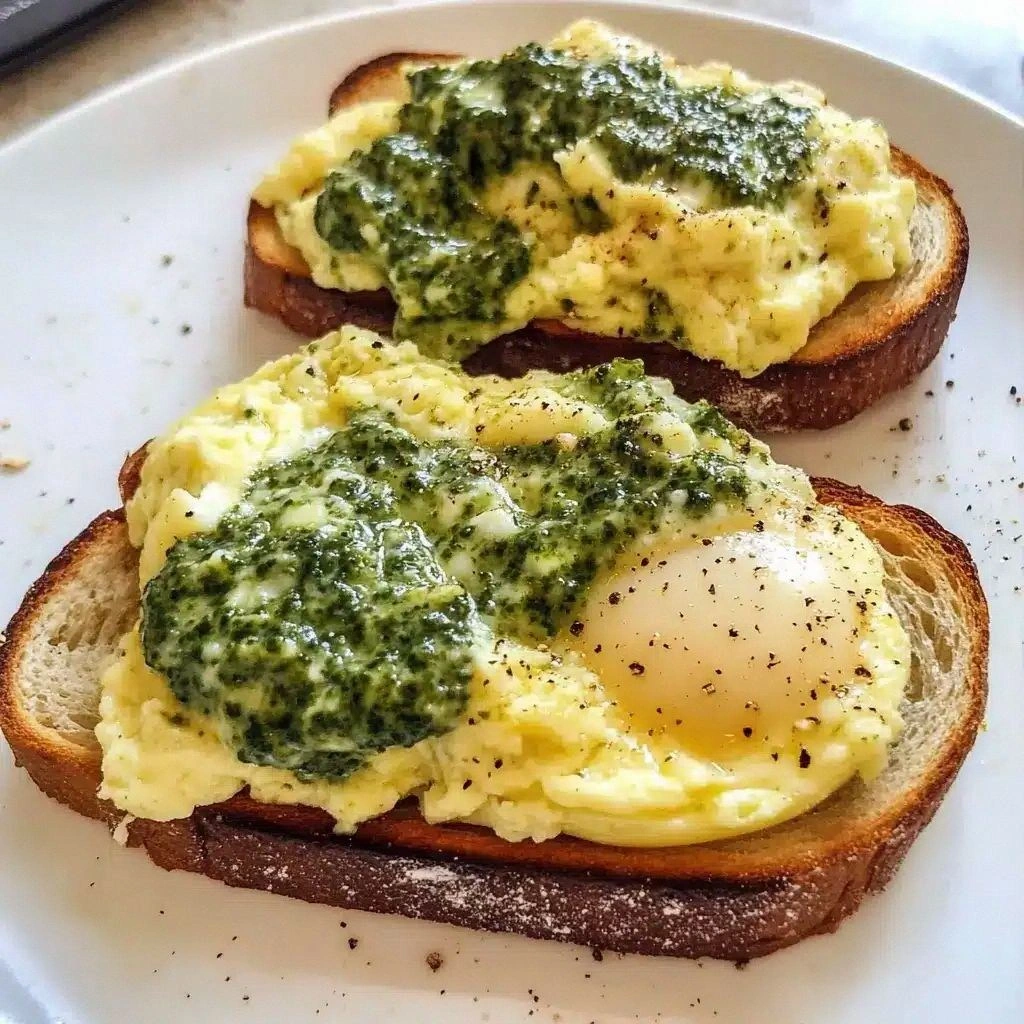
- Add the pesto directly into the skillet, swirling it into the eggs. The pesto should coat the eggs evenly, infusing the entire dish with basil and pine nut flavors. Stir slowly to keep the eggs from breaking apart. The mixture should smell aromatic, with a hint of lemon. This step is crucial for achieving that vibrant, green hue.
- Remove the skillet from the heat and let the residual heat finish cooking the eggs. The eggs will continue to set as they rest, becoming silky and creamy. If you prefer a slightly firmer texture, give them a final quick stir. The goal is a soft, custard‑like consistency that clings to the toast.
- While the eggs are resting, toast the bread slices in a toaster or on a skillet with a light brush of olive oil until golden brown. The toast should be crisp on the outside but still tender on the inside. A good toast provides the perfect crunch that contrasts with the eggs’ softness. Let the toast cool slightly before placing it on a plate.
- Place the scrambled eggs on top of the toasted bread, letting the sauce pool around the edges. Sprinkle grated Parmesan over the eggs and drizzle a few drops of olive oil for shine. Finish with a pinch of flaky sea salt and a few fresh basil leaves for a burst of color. The final presentation should look inviting and ready to devour.
- Serve immediately, allowing the warmth of the eggs to mingle with the crisp toast. The first bite delivers a silky scramble, followed by a crisp bite of toast, and ends with a bright, herbaceous finish. The aroma of basil and lemon will fill your kitchen, making the entire experience sensory.
- If you’re planning to serve the dish to guests, consider arranging the eggs in a shallow bowl and topping the toast with a small spoonful of the scramble, creating a beautiful, layered presentation. This not only looks elegant but also keeps the toast from getting soggy. The dish is versatile enough for brunch, a quick lunch, or a satisfying dinner.
That’s it—you did it. But hold on, I’ve got a few more tricks that will take this to another level.
Insider Tricks for Flawless Results
The Temperature Rule Nobody Follows
Cooking the eggs over medium‑low heat is key; it keeps the proteins from tightening too quickly. If you’re tempted to crank the heat, you’ll end up with rubbery, dry eggs. Keep the skillet at a steady temperature, and use a thermometer if necessary to stay under 180°F (82°C). The gentle heat allows the eggs to set slowly, creating a custard‑like consistency that’s the hallmark of a great scramble.
Why Your Nose Knows Best
The aroma of fresh basil and lemon is a reliable indicator of readiness. When the pesto starts to steam and the eggs emit a rich, buttery scent, it’s time to remove the skillet from the heat. Trust your nose; it’s a seasoned chef’s secret that ensures the dish is perfectly cooked every time.
The 5-Minute Rest That Changes Everything
Letting the eggs rest for 30 seconds after removing them from heat allows the residual heat to finish the cooking process. This pause ensures the eggs remain moist and creamy instead of drying out. If you’re in a hurry, you can skip the rest, but the flavor and texture will suffer slightly.
The Quick Toast Trick
Brushing the bread with a light layer of olive oil before toasting adds a subtle nutty flavor and a golden crust. It also prevents the bread from becoming overly dry. If you prefer a crispier texture, toast the bread until it’s lightly browned on both sides, but watch for burn marks.
The Fresh Herb Finale
Adding fresh basil leaves or microgreens right before serving brightens the dish and adds a fresh crunch. The green garnish not only looks appealing but also enhances the overall flavor profile. If you’re serving guests, a handful of basil leaves on top can impress and elevate the presentation.
The Olive Oil Drizzle
A final drizzle of high‑quality extra‑virgin olive oil over the eggs adds a glossy sheen and a peppery finish that ties all the flavors together. The oil should be cold, poured slowly, and spread evenly to avoid any greasy patches. This simple step can transform a good dish into a great one.
With these insider tricks in your culinary toolkit, you’ll consistently deliver a breakfast that’s both comforting and adventurous.
Creative Twists and Variations
This recipe is a playground. Here are some of my favorite ways to switch things up:
Mediterranean Melt
Swap the basil pesto for sun‑dried tomato pesto and add a handful of chopped kalamata olives to the scramble. The salty olives and sweet tomato bring a Mediterranean vibe, and the olives add a pleasant chew. Serve on ciabatta for a robust bread base.
Spicy Morning Kick
Add a pinch of crushed red pepper flakes to the pesto before mixing into the eggs. The heat will give the dish an extra punch, perfect for those who love a spicy start. Finish with a drizzle of chili oil for an extra layer of flavor.
Cheese Lover’s Dream
Fold in a handful of shredded mozzarella or cheddar during the last minute of cooking. The cheese melts into the eggs, creating a gooey, savory layer. Top the toast with a sprinkle of grated aged Gouda for an extra burst of umami.
Vegan Version
Use a plant‑based egg substitute like Just Egg or a chickpea flour batter. Replace butter with coconut oil or vegan butter and use nutritional yeast in place of Parmesan. The result is a creamy, protein‑rich scramble that’s entirely plant‑based.
Breakfast Bowl
Serve the scrambled eggs in a bowl with a side of roasted sweet potatoes, sautéed spinach, and a dollop of Greek yogurt. The combination offers a balanced meal with protein, healthy fats, and complex carbs. The yogurt adds a tangy contrast to the richness of the eggs.
Breakfast Tacos
Fill soft corn tortillas with the pesto scramble, a handful of chopped tomatoes, and a sprinkle of crumbled feta. The tortilla adds a chewy texture, and the feta provides a salty, tangy finish. This variation is great for a quick, handheld breakfast.
Feel free to mix and match these ideas to suit your taste or what’s on hand. The beauty of this recipe is its adaptability, making it a staple for any kitchen.
Storing and Bringing It Back to Life
Fridge Storage
Store the leftover pesto scramble in an airtight container in the refrigerator for up to 2 days. The eggs will firm up slightly, so reheat gently to restore the creamy texture. Use a microwave on low power, stirring every 15 seconds to prevent overheating.
Freezer Friendly
The scramble can be frozen for up to 3 months. Portion it into freezer‑safe containers, leaving a little space at the top for expansion. Thaw overnight in the refrigerator before reheating. The texture remains smooth, and the flavor stays vibrant.
Best Reheating Method
To bring the dish back to life, reheat the scramble in a skillet over low heat, adding a splash of water or milk to keep it moist. The water helps steam the eggs, restoring their softness. Finish with a sprinkle of Parmesan and a drizzle of olive oil for a fresh finish.
Add a tiny splash of water before reheating, and it steams back to perfection. This simple trick prevents the eggs from drying out during the reheating process.