
Japanese Udon Soup

As a child, I would often visit my grandparents in Japan, where my grandmother would lovingly prepare Japanese Udon Soup for me. The rich, savory broth and springy noodles were a comforting treat that I looked forward to every time. Now, as a home cook, I'm excited to share my own version of this classic Japanese dish with you. In this recipe, we'll explore the simple yet flavorful ingredients and techniques that make Japanese Udon Soup a staple of Japanese cuisine.
One of the key components of Japanese Udon Soup is the dashi broth, a traditional Japanese cooking stock made from kombu and katsuobushi. This broth is the foundation of the soup, and its rich, umami flavor is what sets Japanese Udon Soup apart from other noodle soups. We'll also be using udon noodles, which are thicker and chewier than other types of noodles, making them perfect for this hearty soup.
Another important ingredient in Japanese Udon Soup is the pork slices, which are typically thinly sliced and cooked in a hot skillet before being added to the soup. We'll be using a technique called velveting to make the pork slices tender and flavorful, and we'll also be adding some green onions and grated ginger for extra flavor and texture.
Whether you're a seasoned cook or just starting out, this recipe is easy to follow and requires minimal specialized equipment. So let's get started and make a delicious pot of Japanese Udon Soup!
In this recipe, we'll be using a combination of traditional Japanese ingredients and techniques, along with some modern twists and substitutions to make the dish more accessible to home cooks. We'll also be providing some helpful tips and variations to help you customize the recipe to your taste.
Why You’ll Love This Recipe
- This recipe is easy to make and requires minimal specialized equipment.
- The dashi broth is a traditional Japanese cooking stock that is rich in umami flavor.
- The udon noodles are thicker and chewier than other types of noodles, making them perfect for this hearty soup.
- The pork slices are tender and flavorful, thanks to the velveting technique.
- The green onions and grated ginger add a fresh and aromatic flavor to the soup.
- This recipe is customizable, with many variations and substitutions available.
Why This Recipe Works
The key to a great Japanese Udon Soup is the dashi broth, which is made by simmering kombu and katsuobushi in water. This broth is rich in umami flavor, which is the fifth taste, in addition to sweet, sour, bitter, and salty. The umami flavor comes from the glutamates in the kombu and katsuobushi, which are naturally occurring amino acids that are found in many foods.
Another important factor in Japanese Udon Soup is the texture of the noodles. Udon noodles are thicker and chewier than other types of noodles, which makes them perfect for this hearty soup. The noodles are also cooked separately from the broth, which helps to preserve their texture and prevent them from becoming mushy.
The pork slices in Japanese Udon Soup are also an important component, as they add protein and flavor to the dish. We'll be using a technique called velveting to make the pork slices tender and flavorful, which involves marinating the pork in a mixture of soy sauce, sugar, and cornstarch before cooking it in a hot skillet.
Finally, the green onions and grated ginger add a fresh and aromatic flavor to the soup, which helps to balance out the richness of the broth and the pork. The green onions are also a nice textural contrast to the soft noodles and pork, adding a bit of crunch to the dish.
Ingredients You’ll Need
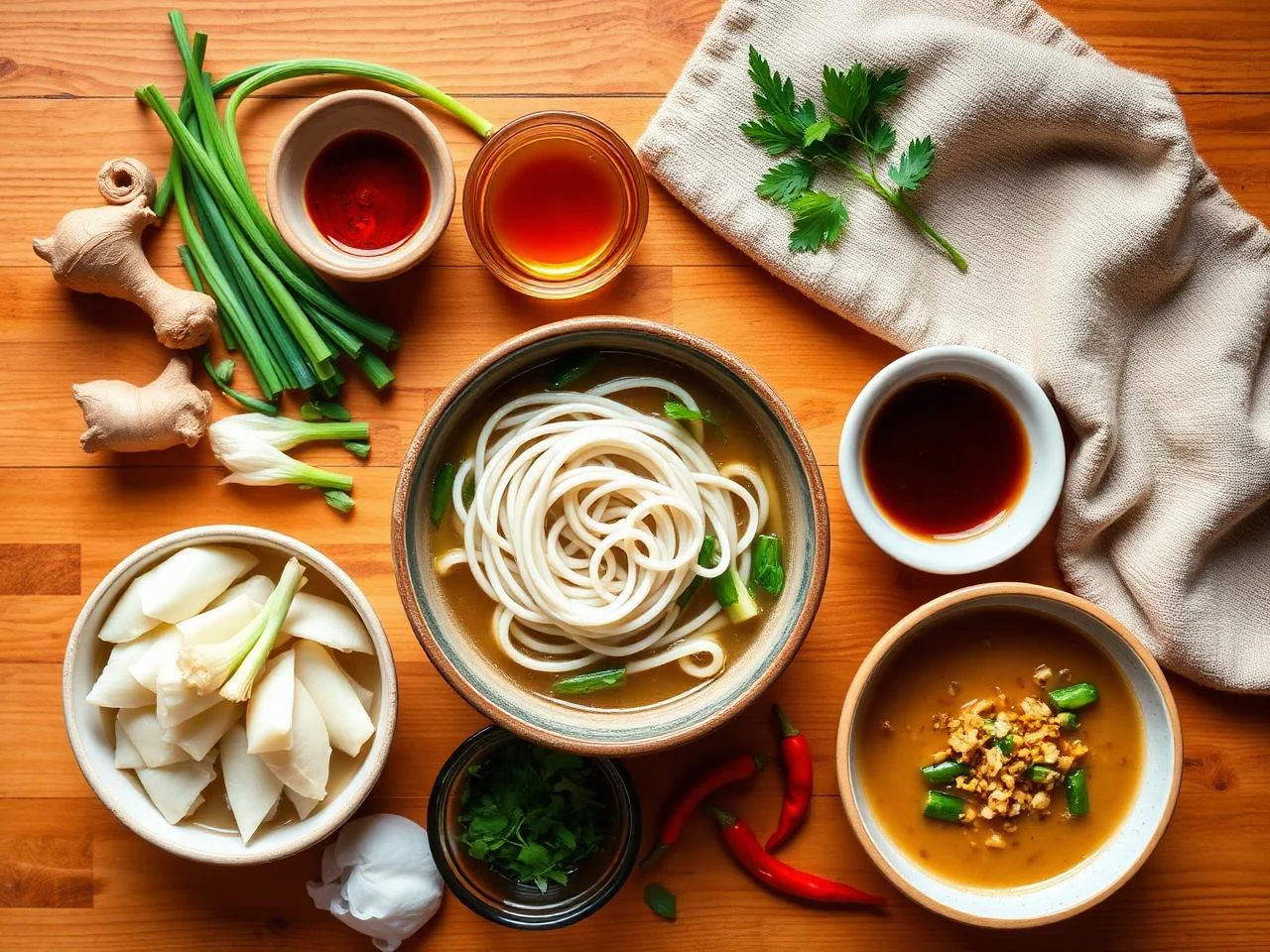
To make Japanese Udon Soup, you'll need a few key ingredients, including kombu, katsuobushi, udon noodles, pork slices, green onions, and grated ginger. You'll also need some basic pantry staples, such as soy sauce, sugar, and cornstarch. Don't worry if you can't find some of these ingredients in your local grocery store - we'll provide some substitutions and variations to help you make the recipe work with what you have on hand.
When shopping for ingredients, be sure to look for high-quality kombu and katsuobushi, as these will give your dashi broth the best flavor. You should also try to find fresh udon noodles, as these will have a better texture than dried noodles. If you can't find udon noodles, you can substitute with other types of noodles, such as soba or ramen noodles.
- 2 cups waterThis is the base for the dashi broth, which is the foundation of the soup. You can use more or less water depending on how strong you like your broth.
- 1/2 cup kombuKombu is a type of seaweed that is used to make dashi broth. It's rich in umami flavor and is a key component of Japanese cuisine.
- 1/4 cup katsuobushiKatsuobushi is a type of dried fish that is used to make dashi broth. It's rich in umami flavor and is a key component of Japanese cuisine.
- 1 lb udon noodlesUdon noodles are thicker and chewier than other types of noodles, making them perfect for this hearty soup. You can find them in most Asian grocery stores or online.
- 1/2 lb pork slicesPork slices are a common protein used in Japanese Udon Soup. You can use other types of protein, such as chicken or beef, if you prefer.
- 2 tablespoons soy sauceSoy sauce is a common seasoning used in Japanese cuisine. It adds a salty, umami flavor to the soup.
- 1 tablespoon sugarSugar is used to balance out the savory flavors in the soup. You can use more or less sugar depending on your taste.
- 1 tablespoon cornstarchCornstarch is used to thicken the soup and give it a smooth texture. You can use more or less cornstarch depending on how thick you like your soup.
- 1/4 cup green onions, thinly slicedGreen onions add a fresh and aromatic flavor to the soup. You can use more or less green onions depending on your taste.
- 2 cloves garlic, mincedGarlic is used to add flavor to the soup. You can use more or less garlic depending on your taste.
- 1 tablespoon grated gingerGinger is used to add flavor to the soup. You can use more or less ginger depending on your taste.
- 2 tablespoons vegetable oilVegetable oil is used to cook the pork slices and add flavor to the soup. You can use more or less oil depending on your taste.
Equipment You’ll Need
How to Make Japanese Udon Soup
- 1In a large pot, combine the water, kombu, and katsuobushi. Bring the mixture to a boil over high heat, then reduce the heat to low and simmer for 10-15 minutes, or until the broth is rich and flavorful.
- 2While the broth is simmering, cook the udon noodles according to the package instructions. Typically, this involves boiling the noodles for 8-10 minutes, or until they are tender but still slightly firm in the center.
- 3In a small bowl, whisk together the soy sauce, sugar, and cornstarch. Add this mixture to the broth and stir to combine.
- 4In a skillet, heat 1 tablespoon of vegetable oil over medium-high heat. Add the pork slices and cook until they are browned and cooked through, about 3-4 minutes per side.
- 5Add the cooked pork slices to the broth and stir to combine.
- 6Add the green onions, garlic, and ginger to the broth and stir to combine.
- 7Bring the broth to a simmer and cook for an additional 2-3 minutes, or until the flavors have melded together and the soup is hot and steaming.
- 8To serve, place some noodles in a bowl and ladle the hot broth over the top. Garnish with additional green onions and grated ginger, if desired.
- 9Let the soup rest for 5-10 minutes before serving, to allow the flavors to meld together and the soup to cool slightly.
- 10Serve the soup hot, garnished with additional green onions and grated ginger, if desired.
- 11You can also customize the soup to your taste by adding other ingredients, such as sliced scallions or grated daikon radish.
- 12To make the soup more substantial, you can add some sliced vegetables, such as carrots or zucchini, to the broth and cook until they are tender.
- 13You can also serve the soup with some pickled ginger or wasabi, for an added burst of flavor.
Expert Tips
- Use high-quality kombu and katsuobushi to make the best dashi broth.
- Cook the udon noodles according to the package instructions to ensure they are tender but still slightly firm in the center.
- Don't overcook the pork slices, as they can become tough and dry.
- Add the green onions, garlic, and ginger to the broth at the end of cooking, so they retain their flavor and texture.
- Let the soup rest for 5-10 minutes before serving, to allow the flavors to meld together and the soup to cool slightly.
- Customize the soup to your taste by adding other ingredients, such as sliced scallions or grated daikon radish.
- Serve the soup hot, garnished with additional green onions and grated ginger, if desired.
- Consider serving the soup with some pickled ginger or wasabi, for an added burst of flavor.
Common Mistakes to Avoid
- Using low-quality kombu and katsuobushi, which can result in a weak and flavorless broth.
- Overcooking the udon noodles, which can make them mushy and unappetizing.
- Not letting the soup rest before serving, which can result in a soup that is too hot and unbalanced.
- Not customizing the soup to your taste, which can result in a soup that is boring and uninteresting.
- Not serving the soup hot, which can result in a soup that is unappetizing and uninviting.
- Not garnishing the soup with additional green onions and grated ginger, which can result in a soup that is lacking in flavor and texture.
Variations and Substitutions
- Add some sliced scallions or grated daikon radish to the broth for added flavor and texture.
- Use different types of protein, such as chicken or beef, instead of pork.
- Add some sliced vegetables, such as carrots or zucchini, to the broth for added flavor and nutrition.
- Use different types of noodles, such as soba or ramen noodles, instead of udon noodles.
- Add some pickled ginger or wasabi to the soup for an added burst of flavor.
- Serve the soup with some steamed bok choy or other Asian greens for a more substantial meal.
- Use different types of seasonings, such as soy sauce or sesame oil, to give the soup a unique flavor.
What to Serve With Japanese Udon Soup
Japanese Udon Soup is a hearty and comforting soup that is perfect for a cold winter's day. It's also a great option for a quick and easy meal, as it can be made in under 30 minutes. To serve, place some noodles in a bowl and ladle the hot broth over the top. Garnish with additional green onions and grated ginger, if desired.
You can also customize the soup to your taste by adding other ingredients, such as sliced scallions or grated daikon radish. Consider serving the soup with some pickled ginger or wasabi, for an added burst of flavor. You can also serve the soup with some steamed bok choy or other Asian greens for a more substantial meal.
Make-Ahead, Storage, Freezing and Reheating
Japanese Udon Soup can be stored in the refrigerator for up to 3 days or frozen for up to 2 months. To refrigerate, let the soup cool to room temperature, then transfer it to an airtight container and store it in the refrigerator. To freeze, let the soup cool to room temperature, then transfer it to an airtight container or freezer bag and store it in the freezer.
To reheat the soup, simply microwave it or heat it on the stovetop until it's hot and steaming. You can also add some additional ingredients, such as sliced scallions or grated daikon radish, to the soup to give it a fresh flavor.
It's also important to note that Japanese Udon Soup is a great make-ahead meal, as it can be made in advance and refrigerated or frozen until you're ready to serve it. Simply reheat the soup and add any additional ingredients you like, and you'll have a delicious and satisfying meal in no time.
In addition to refrigerating or freezing the soup, you can also store the dashi broth separately and use it as a base for other soups or dishes. Simply strain the broth and store it in an airtight container in the refrigerator for up to 3 days or freeze it for up to 2 months.
Frequently Asked Questions
What is dashi broth?
Dashi broth is a traditional Japanese cooking stock made from kombu and katsuobushi. It's rich in umami flavor and is a key component of many Japanese dishes, including Japanese Udon Soup.
What type of noodles should I use?
Udon noodles are the traditional choice for Japanese Udon Soup, but you can also use other types of noodles, such as soba or ramen noodles.
Can I customize the soup to my taste?
Yes, you can customize the soup to your taste by adding other ingredients, such as sliced scallions or grated daikon radish. You can also use different types of protein, such as chicken or beef, instead of pork.
How do I store the soup?
Japanese Udon Soup can be stored in the refrigerator for up to 3 days or frozen for up to 2 months. To refrigerate, let the soup cool to room temperature, then transfer it to an airtight container and store it in the refrigerator. To freeze, let the soup cool to room temperature, then transfer it to an airtight container or freezer bag and store it in the freezer.
Can I make the soup ahead of time?
Yes, Japanese Udon Soup is a great make-ahead meal, as it can be made in advance and refrigerated or frozen until you're ready to serve it. Simply reheat the soup and add any additional ingredients you like, and you'll have a delicious and satisfying meal in no time.
What are some common mistakes to avoid?
Some common mistakes to avoid when making Japanese Udon Soup include using low-quality kombu and katsuobushi, overcooking the udon noodles, and not letting the soup rest before serving. You should also be careful not to overseason the soup, as this can result in a broth that is too salty or flavorful.
Can I serve the soup with other dishes?
Yes, Japanese Udon Soup can be served with a variety of other dishes, such as steamed bok choy or other Asian greens. You can also serve it with some pickled ginger or wasabi, for an added burst of flavor.
What are some variations I can try?
Some variations you can try include adding some sliced scallions or grated daikon radish to the broth, using different types of protein, such as chicken or beef, instead of pork, and adding some sliced vegetables, such as carrots or zucchini, to the broth.
Ingredients
- 2 cups water
- 1/2 cup kombu
- 1/4 cup katsuobushi
- 1 lb udon noodles
- 1/2 lb pork slices
- 2 tablespoons soy sauce
- 1 tablespoon sugar
- 1 tablespoon cornstarch
- 1/4 cup green onions, thinly sliced
- 2 cloves garlic, minced
- 1 tablespoon grated ginger
- 2 tablespoons vegetable oil
Instructions
- In a large pot, combine the water, kombu, and katsuobushi. Bring the mixture to a boil over high heat, then reduce the heat to low and simmer for 10-15 minutes, or until the broth is rich and flavorful.
- While the broth is simmering, cook the udon noodles according to the package instructions. Typically, this involves boiling the noodles for 8-10 minutes, or until they are tender but still slightly firm in the center.
- In a small bowl, whisk together the soy sauce, sugar, and cornstarch. Add this mixture to the broth and stir to combine.
- In a skillet, heat 1 tablespoon of vegetable oil over medium-high heat. Add the pork slices and cook until they are browned and cooked through, about 3-4 minutes per side.
- Add the cooked pork slices to the broth and stir to combine.
- Add the green onions, garlic, and ginger to the broth and stir to combine.
- Bring the broth to a simmer and cook for an additional 2-3 minutes, or until the flavors have melded together and the soup is hot and steaming.
- To serve, place some noodles in a bowl and ladle the hot broth over the top. Garnish with additional green onions and grated ginger, if desired.
- Let the soup rest for 5-10 minutes before serving, to allow the flavors to meld together and the soup to cool slightly.
- Serve the soup hot, garnished with additional green onions and grated ginger, if desired.
- You can also customize the soup to your taste by adding other ingredients, such as sliced scallions or grated daikon radish.
- To make the soup more substantial, you can add some sliced vegetables, such as carrots or zucchini, to the broth and cook until they are tender.
- You can also serve the soup with some pickled ginger or wasabi, for an added burst of flavor.